


 ice.cube
 hr.ready
 p.three
 AspiraAI
 Blog
Blog E-Brochures
 Whitepapers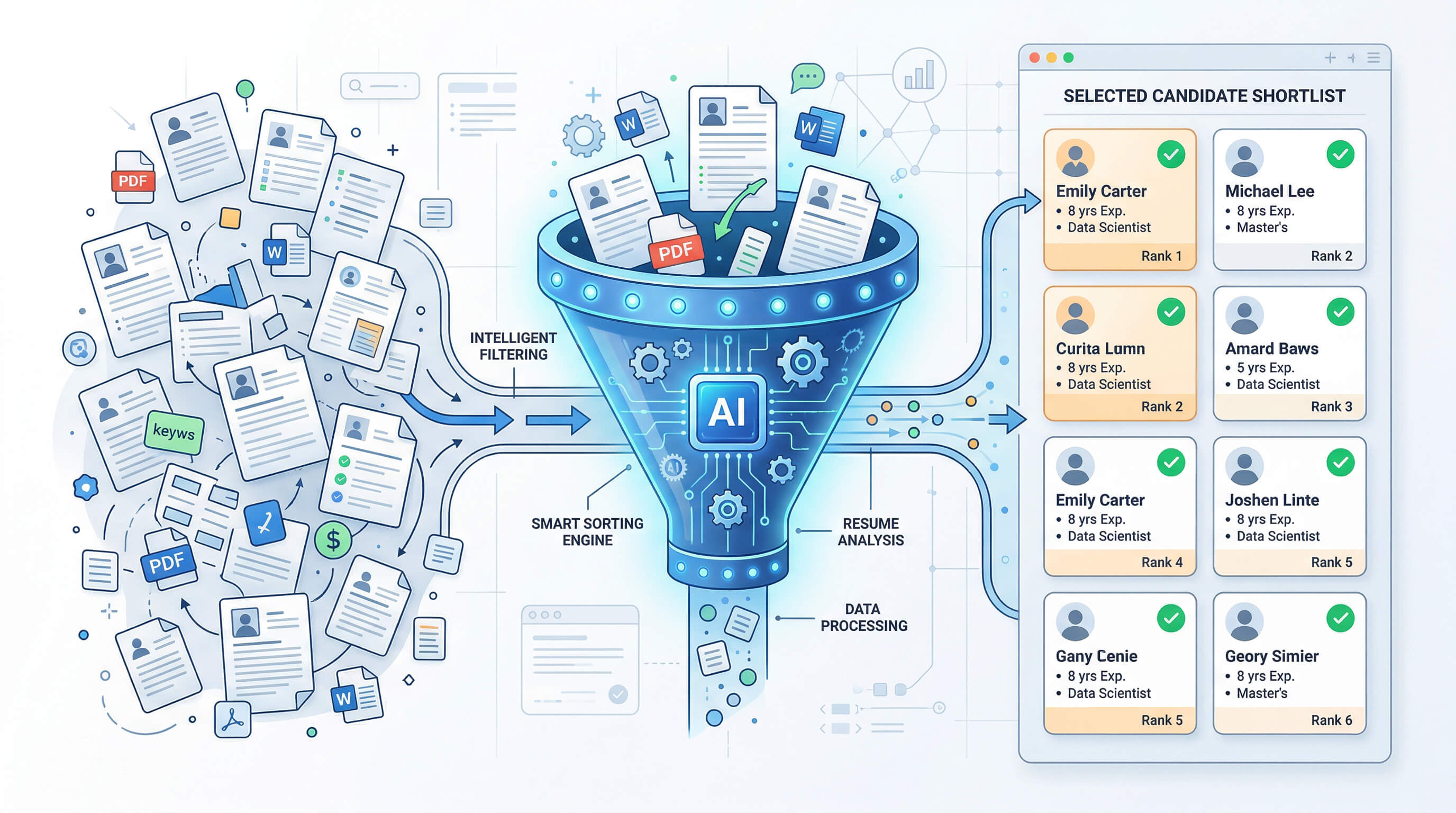
Open any job portal today and it feels like standing in front of an endless shelf of options. Thousands of roles. New postings every hour. Notifications that never stop.
And yet, despite all this abundance, many professionals feel stuck. They apply. They wait. They refresh their inbox. Weeks pass with little to show for the effort. Interviews are rare. Real traction is rarer.
The problem is not effort. It is direction.
The job market of 2026 and beyond does not reward volume. It rewards relevance. It favours people who know where they fit, not those who simply apply everywhere. What once felt like “hustle” now often turns into noise.
This is where the idea of precision job search begins to matter. Instead of chasing every opening, candidates need to understand which roles actually make sense for their skills, experience, and goals. AspiraAI is built around this shift, helping professionals move from random applications to curated job shortlists powered by AI job matching and profile-market mapping.
Why Random Job Search No Longer Works
Most of us were taught to treat job search as a numbers game. Apply widely. Increase your chances. Something will click.
That logic made sense when hiring funnels were smaller and competition was more contained. Today, recruiters often deal with hundreds or even thousands of applications for a single role. Automated screening systems filter aggressively. If your profile does not closely match what the role demands, your application may never reach human eyes.
Over time, this creates a quiet but heavy toll. People begin to doubt themselves. The process starts to feel opaque and unfair. Effort feels disconnected from outcomes.
This is not just inefficient. It is emotionally draining. Precision job search emerges as a way to bring intention back into the process. Instead of reacting to every listing, candidates can start asking a better question: Where do I actually have a strong chance of being considered?
The Real Problems with Traditional Job Platforms
Most job platforms are designed for scale, not for fit. They are built to show more, faster. But more is not always better.
Three patterns show up again and again:
- Low Interview Conversion
Sending out dozens or hundreds of applications rarely leads to the same number of conversations. In crowded funnels, relevance decides visibility. - Shallow Matching
Keyword filters surface roles that “look right” but often miss the deeper requirements of the job. Title match. Real expectations do not. - Time and Energy Drain
Candidates spend hours applying to roles that were never a strong fit in the first place. The opportunity cost is real: time that could have gone into preparing for higher quality opportunities is lost.
Over weeks and months, this cycle becomes exhausting. The system rewards speed and volume, but the market rewards alignment.
Why Precision Is Becoming Non-Negotiable
The structure of work itself is changing. According to the World Economic Forum’s Future of Jobs Report 2025, by 2030 around 22% of current jobs will undergo structural change. The report estimates 170 million new roles will be created, while 92 million existing roles will be displaced, leading to a net increase of 78 million jobs globally.
At the same time, demand for digital, AI, and data skills continues to rise sharply. Role definitions are shifting faster than job titles.
In this environment, job search is no longer about finding what exists. It is about understanding where you fit within what is emerging. Precision means knowing how your current skills translate into today’s demand, and where small, targeted upgrades can unlock entirely new role pathways.
What a Curated Job Shortlist Actually Changes
A curated job shortlist is not just a filtered list. It changes how candidates think about opportunity.
Instead of scrolling endlessly, you are presented with roles where your profile shows real potential. The list is smaller, but the intent is stronger.
Roles are surfaced because they align with what you have done, what you can do, and where the market is hiring right now. They are ordered to help you decide where to focus first, rather than treating every opening as equal.
This subtle shift changes behaviour. Candidates stop applying everywhere. They start applying thoughtfully.
How AspiraAI Makes This Practical
AspiraAI turns this idea of precision into something usable, not theoretical.
You begin by uploading your CV and answering a few context-rich questions. The platform analyses your experience, skills, and career intent using AI models designed to read beyond surface keywords.
From there, AspiraAI builds a profile-market map. This shows how your capabilities line up with real hiring patterns across roles, sectors, and locations. You begin to see where your profile is already strong, and where it may need reinforcement.
Each job in your curated shortlist comes with a fit score. This is not about labelling you “good” or “bad,” but about helping you decide where your effort is most likely to convert into a conversation.
Where gaps exist, AspiraAI also suggests targeted upskilling paths. Instead of vague advice to “learn more,” you get clearer signals about which skills would actually improve your position in the market.
Why This Approach Feels Different for Candidates
When job search becomes more precise, the experience itself changes.
People spend less time applying to roles they were unlikely to get. They spend more time preparing properly for roles where they have a genuine shot. Interview rates improve not because candidates suddenly become “better,” but because the matching itself becomes more honest.
There is also a quieter benefit. When effort starts to produce visible traction, confidence returns. The process feels less random. Momentum becomes easier to sustain.
Seeing Yourself in the Market, Not Just in Your CV
Profile-market mapping adds an important layer of perspective. It helps people see how their skills sit within the current market, not just within their past job titles.
Many professionals are already doing work that aligns with emerging roles, but traditional job boards never surface those connections. Mapping reveals adjacent pathways: roles you could move into with small, targeted learning rather than a full career reset.
This is especially valuable in fast-evolving fields, where what you do often changes faster than what your job title says.
Who This Helps Most
- Graduates trying to turn academic learning into employability.
- Mid-career professionals feeling boxed into old role labels.
- Senior leaders exploring transitions into new functions.
- Career switchers looking for realistic entry points.
- Professionals who know they need to upskill, but do not know where to start.
In each case, the value lies in reducing guesswork. The market becomes something you can read, not just react to.
From Hustle to Strategy
Effort still matters. But effort without direction is expensive. Precision job search shifts the frame from “apply more” to “apply smarter.” It encourages people to treat applications as intentional investments of time and emotional energy.
This is what changes job search from a grind into a strategy.
Closing Thought
In a labour market shaped by AI driven hiring, shifting skill cycles, and constant reinvention, career progress belongs to those who move with clarity, not noise.
AspiraAI does not promise shortcuts. What it offers is orientation. A way to see where you stand, where you fit, and what to build next.
In the years ahead, career advantage will not come from seeing more jobs.
It will come from understanding where you belong in a market that never stops moving.

Chandru Pingali, Founder & Manager Director, Solvecube, is a seasoned corporate leader, with a diverse career spanning 30+ years across banking, pharmaceutical, chemical and IT/ITES global centres. He has engaged in different roles across HR and Strategy, setting or scaling captive centres, M&A, etc. With SolveCube, he is aiming to revolutionize People Strategy, Advisory & Talent Solutions globally, by utilizing deep AI technology.