


 ice.cube
 hr.ready
 p.three
 AspiraAI
 Blog
Blog E-Brochures
 Whitepapers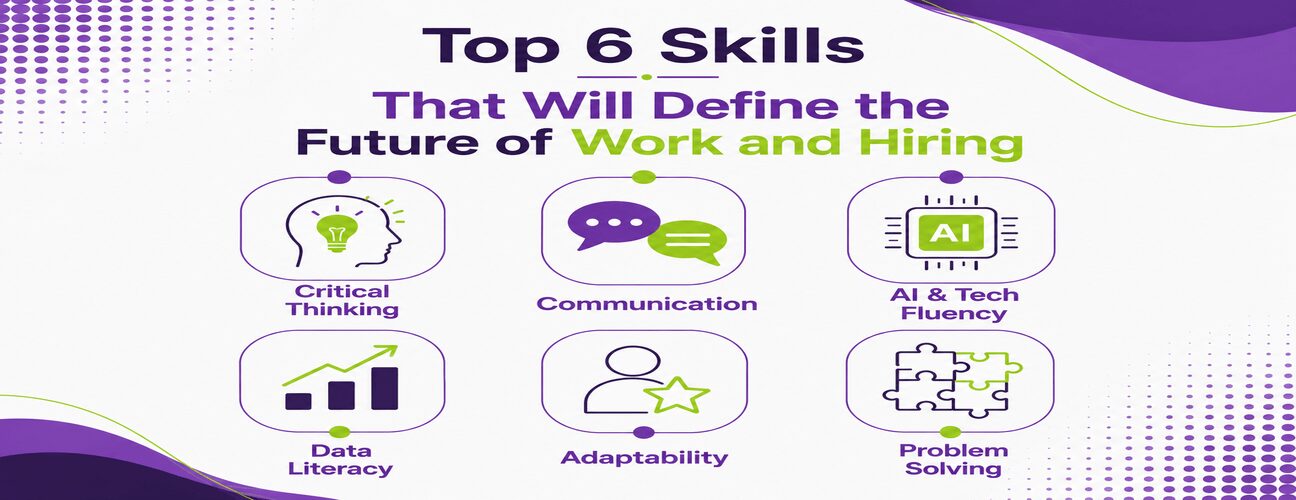
Why Skills Are No Longer Static
For decades, careers followed a relatively predictable path.
Individuals acquired skills early, applied them consistently, and built professional growth around those capabilities.
That model is changing.
Today, industries are evolving faster than ever. New technologies are transforming roles, business models are shifting, and employer expectations are continuously adapting.
The result is a workforce environment where relevance matters more than tenure.
According to the World Economic Forum, nearly 39% of existing skills are expected to change by 2030.
This shift is not simply about technology.
It is about alignment.
The question is no longer whether you are skilled. It is whether your skills are aligned with where the market is heading.
As organisations hire across borders and distributed teams become more common, professionals are increasingly competing in a global talent marketplace. This makes adaptability, communication, problem-solving, and AI fluency more valuable than ever before.
What Are the Most Important Skills for 2030?
As organisations prepare for the Future of Work, six capabilities consistently emerge as critical across industries.
These are not niche skills.
They are foundational capabilities that will shape employability, career progression, and long-term relevance.
Importantly, these are not skills that compete with AI. They are skills that enable professionals to work effectively alongside AI, automation, and increasingly digital workplaces.
The most important skills for 2030 include:
- Analytical Thinking and Problem Solving
- AI and Digital Fluency
- Adaptability
- Communication
- Applied Domain Expertise
- Emotional Intelligence and Decision Leadership
Together, these skills help professionals navigate change, collaborate effectively, and create value in increasingly technology-enabled environments.
The 6 Skills That Will Truly Matter
1. Analytical Thinking and Problem Solving
As automation takes over repetitive tasks, human value increasingly comes from the ability to interpret complexity and make informed decisions.
Organisations need professionals who can:
- Analyse information critically
- Identify patterns
- Evaluate alternatives
- Solve business challenges effectively
Analytical thinking is no longer reserved for specialist roles.
It is becoming a baseline expectation across industries.
2. AI and Digital Fluency
AI is no longer confined to technical teams.
It is becoming embedded in everyday workflows across marketing, operations, finance, customer experience, and HR.
Professionals are increasingly expected to:
- Understand AI-powered tools
- Work effectively alongside automation
- Interpret AI-generated insights
- Make informed decisions using digital technologies
As AI becomes embedded across industries, the greatest advantage will not come from competing with technology, but from knowing how to use it effectively. Professionals who can combine AI tools with human judgment, creativity, and business understanding will be better positioned for future opportunities.
3. Adaptability
Adaptability is often described as a mindset.
In reality, it is a skill.
Professionals who can transition across tools, technologies, responsibilities, and changing business priorities are more likely to remain relevant in rapidly evolving industries.
The ability to learn, unlearn, and relearn is becoming a competitive advantage.
4. Communication in Distributed Work Environments
Work is no longer confined to traditional office structures.
Teams are increasingly:
- Global
- Cross-functional
- Hybrid
- Distributed
The ability to communicate clearly across different stakeholders, locations, and cultures has become a strategic capability.
Professionals who can simplify complexity and communicate effectively are often better positioned for leadership opportunities.
This skill is becoming even more important as organisations expand global hiring practices and build distributed teams across geographies. The ability to communicate clearly across cultures, time zones, and virtual environments is increasingly valued by employers seeking talent that can operate effectively in international and hybrid workplaces.
5. Applied Domain Expertise
The market is increasingly rewarding professionals who can apply deep expertise within a specific context.
Knowledge alone is not enough.
Organisations value individuals who can connect expertise with practical business outcomes.
Applied domain expertise enables professionals to:
- Solve industry-specific challenges
- Deliver specialised value
- Support strategic decision-making
- Drive measurable impact
6. Emotional Intelligence and Decision Leadership
As systems increasingly automate execution, human roles are shifting toward judgment, influence, and leadership.
Professionals must be able to:
- Navigate ambiguity
- Manage stakeholder expectations
- Build trust
- Lead through change
- Make decisions in complex environments
Emotional intelligence is becoming a critical differentiator in a technology-driven workplace.
Why Are Skills Becoming More Important Than Job Titles?
One of the most significant shifts in hiring is the move toward Skills-Based Hiring.
Employers are increasingly evaluating candidates based on capabilities rather than credentials alone.
Job titles describe what someone has done.
Skills indicate what someone can do next.
This shift allows organisations to:
- Identify transferable skills
- Expand talent pools
- Improve hiring quality
- Align talent with evolving business needs
Global organisations are increasingly hiring for capabilities rather than location-specific experience. This shift allows employers to access broader talent pools while creating new opportunities for professionals who can demonstrate relevant skills regardless of geography.
As a result, professionals who understand and communicate their skills effectively gain a significant advantage in the job market. As AI automates more routine tasks, employers are increasingly prioritising skills that demonstrate adaptability, judgment, communication, and the ability to collaborate effectively in global work environments.
How These Skills Apply in Real Careers
The importance of future skills becomes even clearer when viewed through real industry transformations.
-
Marketing
Modern marketing professionals are expected to combine creativity with AI and data literacy.
Understanding AI-powered campaign tools and interpreting performance insights is becoming as important as traditional communication capabilities.
-
Manufacturing and Operations
Automation, predictive systems, and smart technologies are changing operational environments.
Professionals who combine domain expertise with digital fluency are increasingly valuable.
-
Consulting and Client-Facing Roles
Analytical thinking and communication are becoming deeply interconnected.
Professionals are expected not only to solve problems but also to communicate insights clearly across diverse stakeholders.
-
Technology and Product Roles
Organisations increasingly seek individuals who combine technical understanding with business impact.
Decision-making, communication, and domain expertise often differentiate high-performing professionals from purely technical contributors.
Across industries, the pattern remains consistent.
The market rewards relevance, adaptability, and practical application of skills rather than static qualifications alone.
Across all industries, organisations are looking for professionals who can combine technical capabilities with distinctly human strengths such as critical thinking, communication, adaptability, and decision-making. These are the skills that help people remain valuable in AI-enabled workplaces.
Why Most Professionals Still Miss the Mark
Most professionals understand the importance of upskilling.
The challenge is not effort.
It is direction.
Courses are completed.
Certifications are earned.
Skills are added to profiles.
Yet career outcomes often remain unchanged.
Why?
Because learning is frequently disconnected from actual market demand.
Many professionals lack visibility into:
- How their skills align with hiring requirements
- Which gaps are limiting opportunities
- Which capabilities create the highest impact
- What employers are actively seeking
Without this clarity, even significant learning investments can produce limited career returns.
This is where Skill Gap Analysis becomes critical.
It helps professionals move from assumptions to evidence-based career decisions.
Frequently Asked Questions About Future Skills
What Skills Will Be Most Important by 2030?
Analytical thinking, AI fluency, adaptability, communication, domain expertise, and emotional intelligence are expected to become increasingly important across industries.
How Do I Know If My Skills Are Future-Ready?
The most effective approach is to compare your current capabilities against market demand through Skill Gap Analysis and profile-to-market mapping.
Why Is Skill Gap Analysis Important?
Skill Gap Analysis helps identify the difference between current capabilities and the skills required for future career goals, enabling more targeted and effective upskilling.
The Concluding Note
The future of work will not reward those who simply accumulate more skills. It will reward those who develop the right capabilities for an increasingly global, technology-enabled workplace.
As AI continues to transform how work gets done, professionals who combine digital fluency with critical thinking, adaptability, communication, emotional intelligence, and domain expertise will be best positioned to thrive. The goal is not to compete with AI, but to develop the uniquely human skills that make working alongside AI more effective.
Because in a rapidly changing world, the greatest career advantage is not learning more. It is learning what matters most.

Chandru Pingali, Founder & Manager Director, Solvecube, is a seasoned corporate leader, with a diverse career spanning 30+ years across banking, pharmaceutical, chemical and IT/ITES global centres. He has engaged in different roles across HR and Strategy, setting or scaling captive centres, M&A, etc. With SolveCube, he is aiming to revolutionize People Strategy, Advisory & Talent Solutions globally, by utilizing deep AI technology.